Hear Amelia Earhart's 1935 broadcast, restored
The original 1935 radio broadcast and the Diffio restoration side by side, with notes for journalists and educators.
In 1935, two years before she disappeared over the Pacific, Amelia Earhart spoke on the radio about what science and technology had done for women. We ran the broadcast through Diffio AI, our speech restoration tool, and the Daily Mail covered it on October 24, 2026. The original sits beside the restoration, so you can judge for yourself.
The broadcast and its restoration
- 1935"A Woman's Place in Science"
- 1937lost over the Pacific
- Oct 24, 2026the restoration in the Daily Mail
About the recording
The talk, known as "A Woman's Place in Science", survives as a recording, and like most radio audio from the 1930s it is hard work to listen to: a steady bed of hiss, crackle on top of it, and a voice that sounds as if it is coming through a wall. We published the restoration on the diffio.ai homepage.
The 1935 broadcast, original and restored
What the clip contains (text description)
31 seconds of Amelia Earhart speaking in her 1935 radio talk "A Woman's Place in Science", the same passage in both players, matched for loudness. In the original, a steady hiss and crackle sit over her voice; in the restored version they drop away and her voice comes forward. We don't publish a transcript of the excerpt because we haven't checked one against an archival copy.
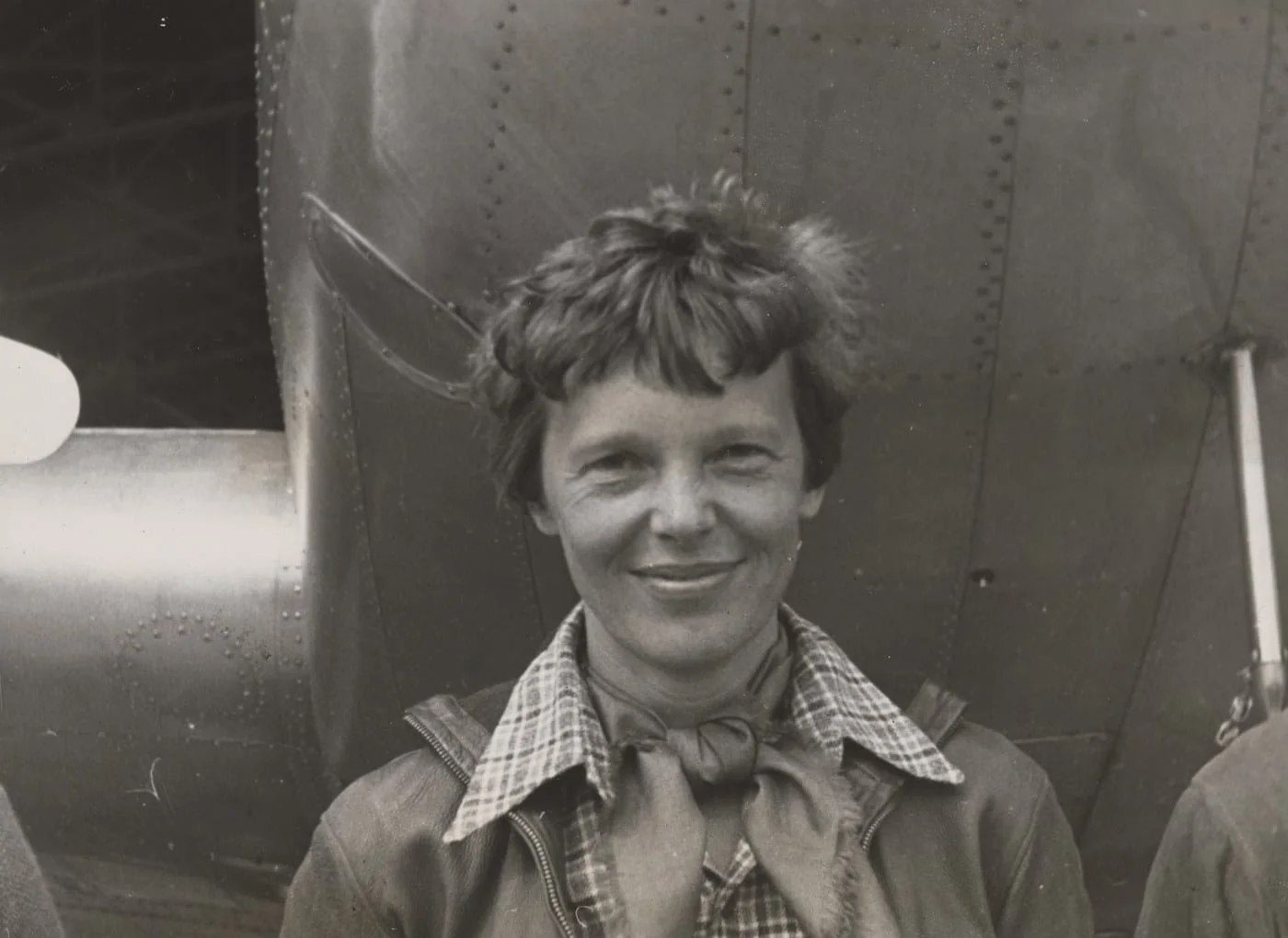
The photo shows Amelia Earhart with her Lockheed Model 10-E Electra in March 1937. Photo: Underwood & Underwood, 1937, Smithsonian National Air and Space Museum, public domain.
What restoration changed in the 1935 broadcast
What you hear
Original
A steady bed of hiss, crackle on top, and a voice that sounds as if it is coming through a wall.
Restored
The hiss and crackle drop away and Earhart's voice comes forward.
Why old voices matter
"History feels different when you can hear someone speak."
Have a family recording like this? Our guide to saving a loved one's voice starts there.
Why we restored this broadcast
"With Amelia Earhart, it's a chance to hear the person behind the photographs and the extraordinary story," I told the Daily Mail. Most people know her from black-and-white pictures; far fewer have heard her talk, partly because the recordings that survive are so rough.
People also know her from the search for her Electra, which went back to Nikumaroro this October. Making the recordings that survive easier to listen to is a small way to bring her a little closer.
The same applies to recordings in family closets, church archives and local history collections: cassette interviews with grandparents, reel-to-reel sermons, oral histories taped in noisy rooms. If you have one of those, our guide to saving a loved one's voice from a voicemail or old video covers getting the file off the device, and you can hear the result on three free uploads.
For journalists and educators
Link to this page to share both versions. Credit: "Restored with Diffio AI (diffio.ai)".
Archive, and how we restored it
Both versions play on this page and on the diffio.ai homepage, so the simplest way to share them is to link here.
| Reuse | Details |
|---|---|
| Archive | The Library of Congress holds a copy of the speech |
| Credit line | "Restored with Diffio AI (diffio.ai)" |
| Questions | nathan.harmon@diffio.ai |
Diffio restores recorded speech. It separates the voice from everything else in the recording and takes the noise away, so the voice sounds closer to a clean microphone: background noise and hiss are removed, room echo is reduced, and supported clipping and distortion are repaired.
Diffio is built to stay faithful to the original: the same person, the same voice and the same words. A changed word or a different-sounding voice is a failure, not how it works, and that is one reason we publish the original next to the restoration. The original stays exactly as it was.
When you mention the restoration, please use the credit line above.
Nathan Harmon is the founder of Diffio AI, based in Colorado Springs.